
 -5%
Anker
BrandAnker
৳900 ৳920 Sale
In stock
30W output from a single USB-C port
GaN construction — roughly 70% smaller than a standard 30W charger
Power IQ 3.0 and PPS for device-aware charging
20V/1.5A profile also supports many USB-C laptops
PPS 3.3–11V/3A covers Samsung Super Fast Charging
ActiveShield 2.0 temperature monitoring
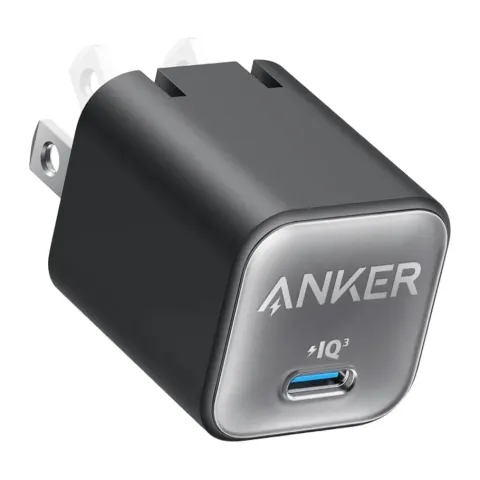
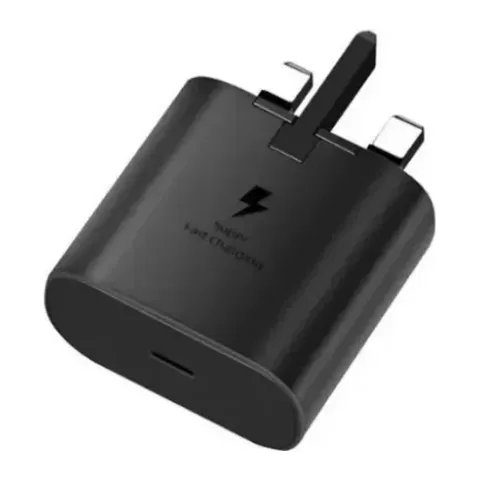
Thirty watts in something roughly the size of a large sugar cube, weighing 36 grams. This is what gallium nitride was invented to make possible. See the alternatives in chargers and adapters.
Gallium nitride switches faster and wastes less energy as heat than the silicon inside a conventional charger. Less waste heat means less material is needed to shed it, which is how Anker fits 30W into something about seventy per cent smaller than a standard 30W adapter. Running cooler is the part that matters in daily use, particularly if it lives permanently in a wall socket beside a bed.
The output profiles run 5V/3A, 9V/3A, 15V/2A and 20V/1.5A. That last one is the interesting figure: 20V is a laptop charging voltage, so this will run many USB-C laptops including a MacBook Air, not just phones. PPS covers 3.3–11V at up to 3A, which is the range Samsung's Super Fast Charging needs, so Galaxy phones charge at full speed rather than falling back. ActiveShield 2.0 monitors temperature continuously and throttles output if it climbs.
Worth knowing before you order. You will need your own USB-C cable, and the cable determines what you actually get: for Samsung Super Fast Charging it must be rated 5A, and for an iPhone you need USB-C to Lightning or USB-C to USB-C depending on the model. Our cables and converters section covers both.
Sourced through authorised retailers in Bangladesh with an official warranty — the term is in the specification above and our warranty policy explains how a claim works.
| Model | A2147 (Anker 511, Nano 3) |
|---|---|
| Technology | GaN, Power IQ 3.0, PPS |
| Type | USB-C wall charger |
| Input | 100–240V ~ 1A, 50–60Hz |
|---|---|
| Maximum output | 30W |
| Output (PIQ 3.0) | 5V/3A, 9V/3A, 15V/2A, 20V/1.5A |
| Output (PPS) | 3.3–11V/3A max, 3.3–16V/2A max |
| Ports | 1 × USB-C |
| Safety | ActiveShield 2.0 |
| Cable included | No |
|---|---|
| Dimensions | 1.12 × 1.12 × 1.39 in |
| Weight | Approx. 36g |
| Warranty | 18 months official |
|---|
No — you will need your own USB-C cable. Which one matters: Samsung Super Fast Charging needs a 5A-rated cable, and an iPhone needs USB-C to Lightning or USB-C to USB-C depending on the model. The wrong cable caps your speed.
Many of them, yes. The 20V/1.5A profile is a genuine laptop charging voltage, so a MacBook Air and most thin Windows machines will charge from it. Larger machines want more than 30W and will charge slowly.
Gallium nitride instead of silicon. GaN switches faster and wastes less energy as heat, so less material is needed to dissipate that heat. The result is roughly seventy per cent smaller for the same output, running cooler as well.
Yes. The PPS range of 3.3 to 11 volts at up to 3 amps is what Samsung's Super Fast Charging requires, so a Galaxy phone charges at full speed rather than falling back to standard Power Delivery. You still need a 5A cable.
It monitors the charger's temperature continuously and reduces output if it climbs too high. Heat is what damages both chargers and phone batteries, so a charger that actively watches its own temperature is doing something genuinely useful.
No reviews yet
-5% Anker
 -25%
Sannai
 -10%
QCY
 -6%
Samsung