
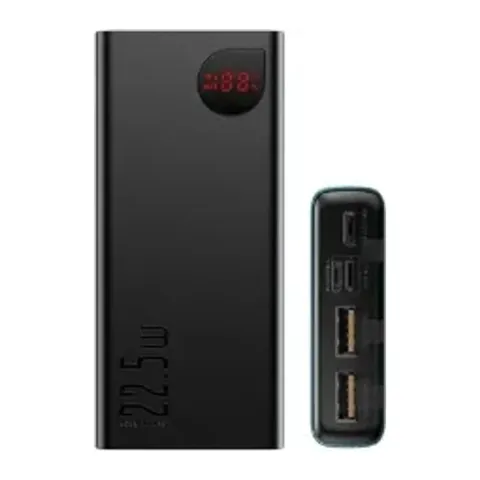
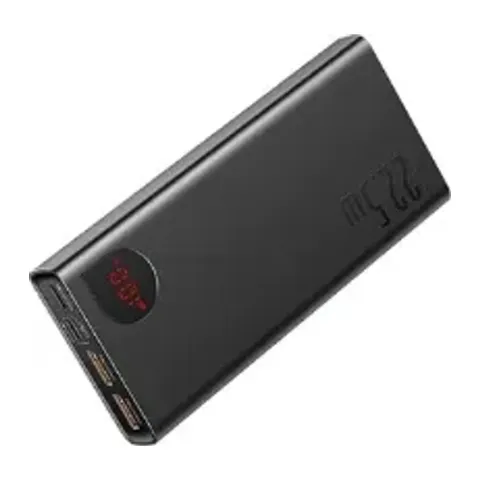
 -25%
Baseus
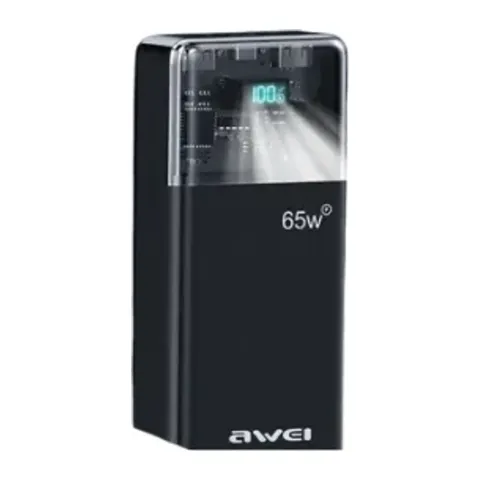
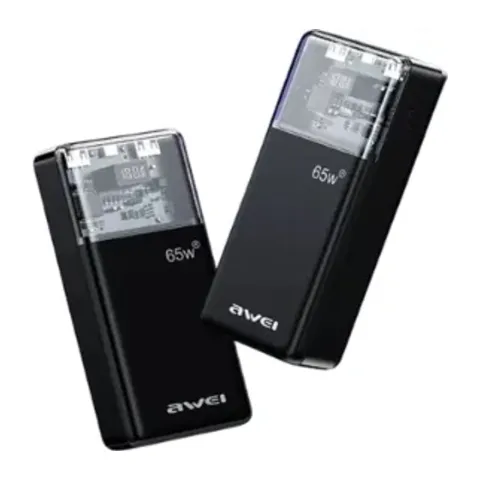
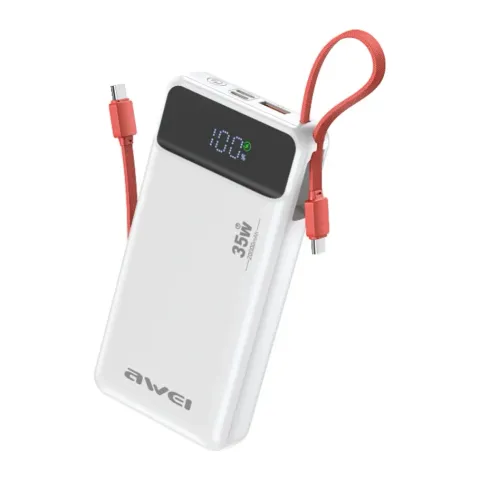
BrandAwei
৳3,750 ৳3,800 Sale
In stock
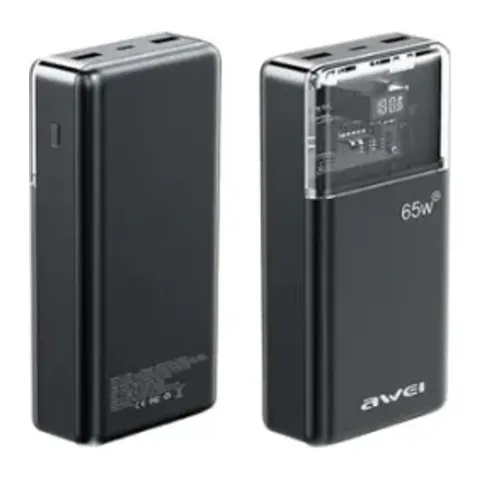
30000mAh — one of the largest capacities you can legally fly with
65W USB-C Power Delivery, enough for most laptops
Charges phones, tablets and laptops from one bank
Fast recharge over USB-C
Black finish
Thirty thousand milliamp-hours at 65W is close to the practical ceiling for a portable battery — beyond this you run into airline limits rather than engineering ones. See the smaller capacities in power banks.
Sixty-five watts is a real laptop charging figure, not a phone one. It runs a MacBook Pro 14-inch, any MacBook Air, and the large majority of Windows ultrabooks at or near full speed — meaning the laptop charges while you use it rather than merely draining more slowly. A phone will draw perhaps a third of that, which is fine; the headroom exists for the laptop. This is the difference between a power bank that extends a workday and one that only rescues a phone.
A 30000mAh cell at 3.7V is about 111 watt-hours. Most airlines cap carry-on batteries at 100Wh without prior approval, and 160Wh with it, so this one sits in the band that needs you to ask the airline first. It must travel in the cabin, never in checked luggage. Check before you fly rather than at the gate — this is the single most common reason a power bank gets confiscated.
Not 30000mAh. Voltage conversion costs energy, so expect roughly sixty to seventy per cent to reach your devices — around 18000 to 21000mAh in practice, which is still five or six phone charges or roughly two laptop charges. Every power bank loses this; a brand claiming otherwise is measuring it wrong. Recharging a bank this large takes a while, so use a high-wattage adapter for it.
No warranty term is published for this model through our supply route, so we do not state one. Our returns policy covers a unit that arrives faulty.
| Model | P109K |
|---|---|
| Type | Power bank |
| Rated capacity | 30000mAh |
|---|---|
| Energy | Approximately 111Wh |
| Usable output | Approximately 60–70% of rated capacity after conversion |
| Maximum output | 65W USB-C Power Delivery |
|---|---|
| Suitable for | Laptops Tablets Phones |
| Colours | Black |
|---|
You need to ask the airline first. At roughly 111 watt-hours it sits above the 100Wh threshold most carriers allow without approval, though below the 160Wh hard limit. It must go in your cabin bag, never checked luggage.
Yes, for most. Sixty-five watts runs a MacBook Air, a 14-inch MacBook Pro and the majority of Windows ultrabooks at or near full speed, so the laptop gains charge while you work rather than just draining more slowly.
Around five or six for a typical phone. That is fewer than the raw capacity implies because voltage conversion loses energy — you get roughly sixty to seventy per cent delivered, which is normal for every power bank on the market.
A while, because it is large. Use the highest-wattage USB-C adapter you have rather than an old phone charger, otherwise a full recharge can stretch overnight and beyond. The input speed matters as much as the output on a bank this size.
No. Capacity adds weight and bulk, and above 100 watt-hours it adds airline paperwork. If you only ever charge a phone, a 10000mAh bank is lighter and simpler. This size makes sense when a laptop is part of the plan.
No reviews yet
-25% Baseus
Awei
QCY
 -7%
Awei